The Brief
The owner of this California Village townhouse had already bought lighting and had a plan for cameras outside, but no single place where any of it came together. Every product had its own app and none of them talked to each other.
The ask was one brain for the house, running locally, with the owner's own hardware pulled into it rather than thrown away.
The Build
One local hub, the owner's hardware on it
A local automation hub sits at the centre. The lighting they had already bought was integrated into it rather than replaced, which is usually the cheaper and better answer when the hardware is decent. Scenes were built across rooms so a single tap moves the whole ground floor, not one lamp.
Presence instead of motion
Seven presence sensors, including the kitchen and hallway, which is where the old motion sensors kept losing people who were standing still. Lights and scenes follow whoever is actually in the room.
Control on the wall, not only in a pocket
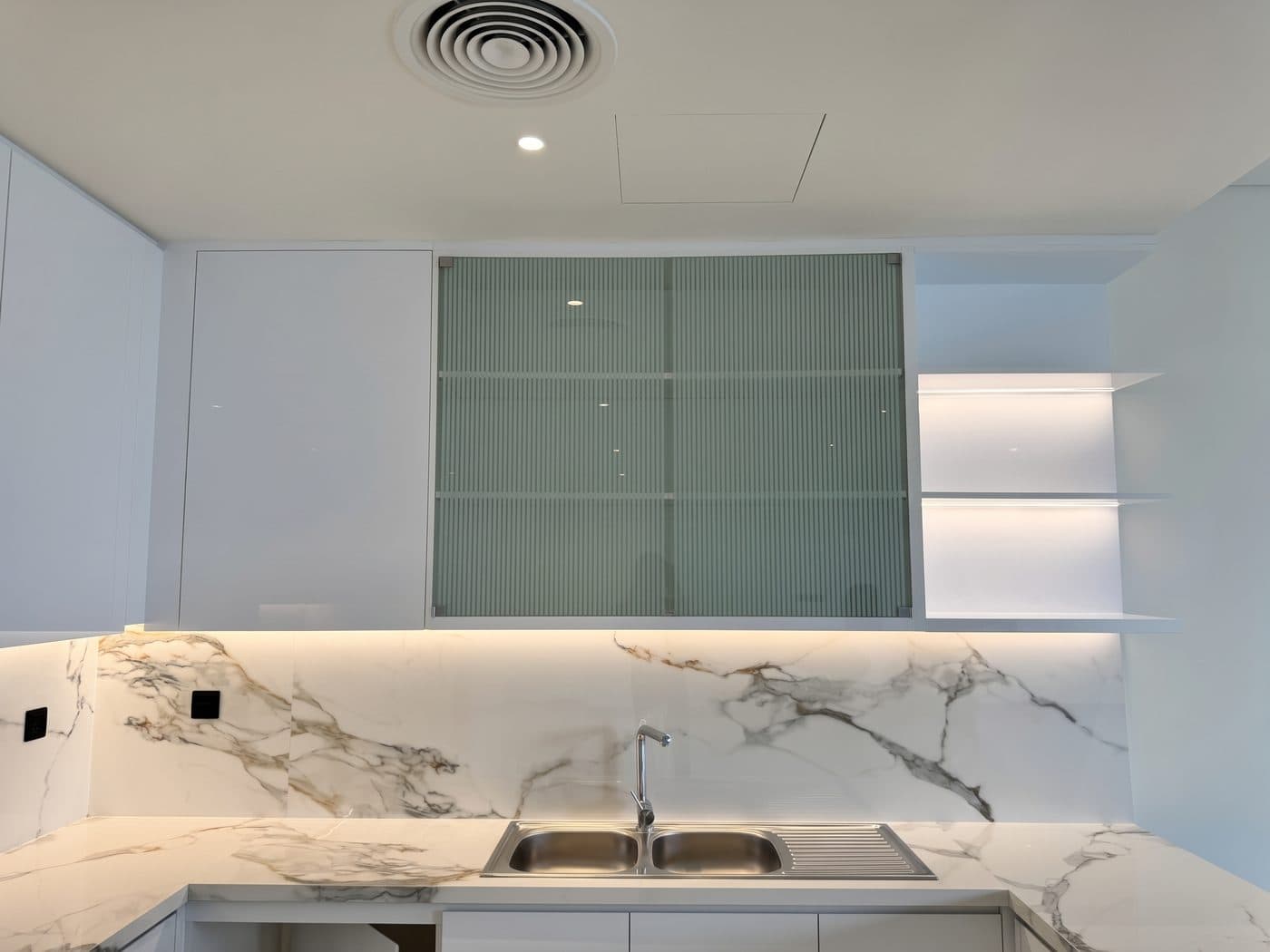
Two in-wall tablet mounts with concealed power and cabling, recessed so they sit flush. Five strip controllers went behind the TV, in the kitchen, at the washroom mirror and outside.
Security outside, recorded on site
Exterior camera coverage across the back of the property, recorded on site rather than in somebody's cloud, with the head end and the cabling terminated into a wall cabinet. Keyless entry at the main door and a video doorbell with two-way talk complete the entrance.
Where It Stands
Finished and handed over. The cameras and network went in first, then the lock, the presence sensors, the strip controllers and the wall tablets, each pulled onto the same local hub as it landed. What we have found is that the houses that end up simplest are the ones where somebody drew the boundary early between what runs locally and what needs an account somewhere.
Have gear from four different brands and no single app? Tell us about your home and we will map what can come together before anything gets replaced.