The Brief
The owner was fitting out a new two-storey villa in Al Furjan with an interior architect already on the drawings. That timing is the best moment to do this work and the easiest one to miss, because the walls are open now and finished in three weeks.
The brief for the ground floor was full lighting control without a wall of visible switches, one panel at the entrance that runs everything, and a front door that opens without keys.
The Build
Relays behind the switches, circuits on the app
Nine dual relay modules cover 18 controlled lighting circuits: living, dining, the three kitchen circuits, indirect spots, the projector, wall lights and the exhaust fan. They sit in-wall behind the existing switch positions, which is what preserved the wall finishes the architect had specified.
Five switches where a hand actually reaches
Rather than smart-switching every plate, five positions got smart wall switches: the driveway outside, the dirty kitchen, the entrance, the stairs and the powder room. Everything else runs on relays and scenes.
The entrance panel runs the house
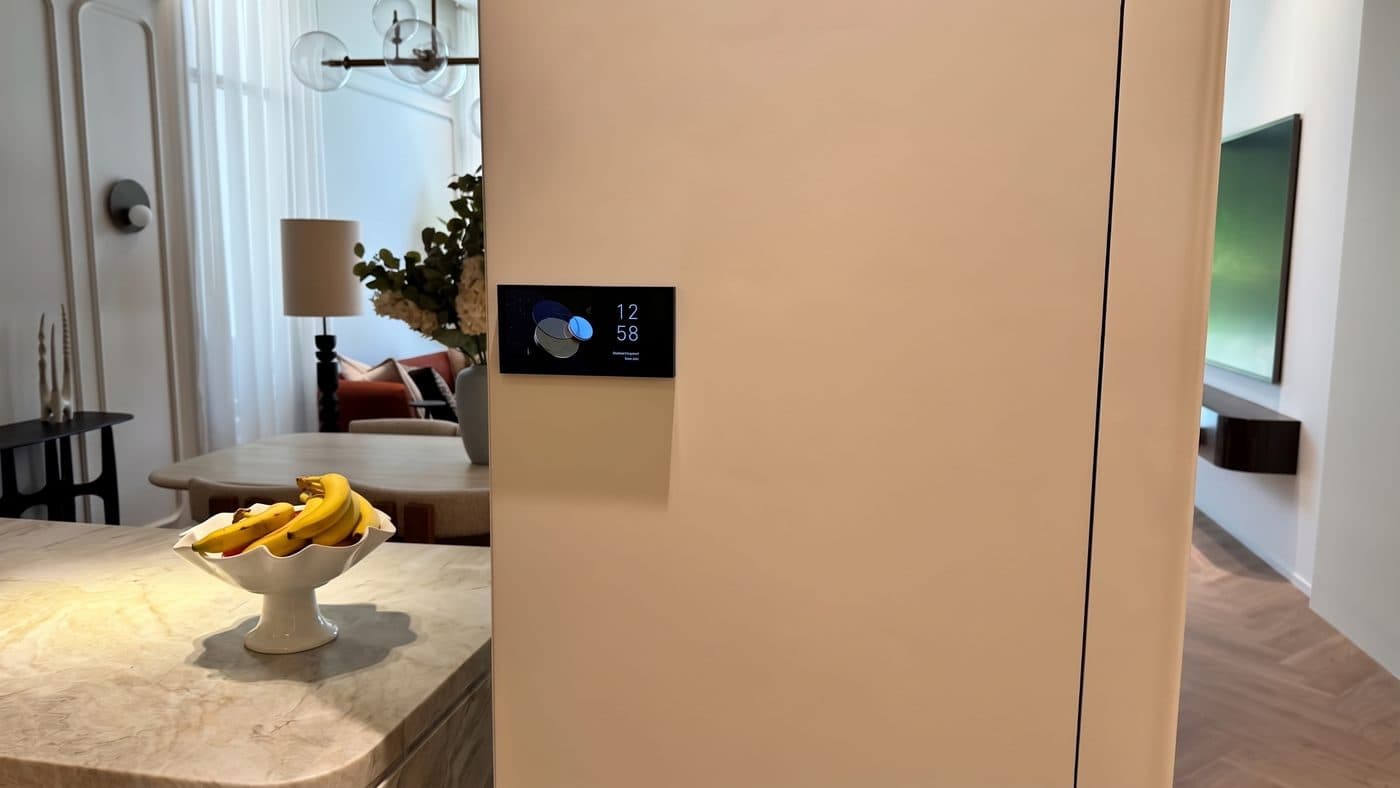
An eight-inch touch panel at the entrance runs the ground floor and doubles as the central radio for the lights, switches and climate. A four-key scene controller sits beside it for the presses people make every day without looking.
A tenth relay module sits at the garage door motor, so the garage opens from the same panel and app as everything else.
Climate and the front door
A wall thermostat controls the ground-floor fan coil zone, with a converter kit specified defensively in case the unit needs one. The main door runs on keyless entry with fingerprint, PIN and a physical key kept as backup, because a door that can only be opened one way is a door that will eventually strand somebody.
The lock speaks Matter and the entrance panel does not, so the lock first worked only over Bluetooth, standing at the door. A small Matter hub in the network cabinet fixed that: the lock now shows up with everything else and works from anywhere.
Where It Stands
Finished and running. First fix ran during the build, which is why the neutral runs exist at all: pulling neutral to a switch box is a two-hour job before the plaster and a demolition job after it.
Second fix waited for the owner's light fittings and wall cladding, then for a new front door, so it landed in stages: switches and relays first, then the panels and thermostat, then the lock on its new door. Once the Matter hub was in, the whole system was rebuilt onto it in one day, so every device, room and scene sits in one clean setup instead of layers added over three months.
Building or renovating right now? Tell us about your home while the walls are still open. That timing changes what is possible more than any product choice does.